Waltz user onboarding
redesign
Transforming Waltz onboarding into a user-friendly, efficient, and brand-aligned experience, where the foreign investors get their “US investor kit” in a record time —no joke—in just 20 minutes.
Industry
Fintech
Proptech
Timeline
Oct 2023 - Mar 2024
Core team
Nof Mualem - Product Manager
Elana Greenspan - UX Writer
me - Product Designer
My role
End-to-end design processes
Design system building
Product foundations definition


Introduction
Investing in anything nowadays takes just a few clicks. Unless you’re a foreign citizen investing in US property. Then, it’s a never-ending mess of endless paperwork and surprises.
Waltz was created to revolutionize the industry by simplifying the purchase process for foreigners with an all-in-one platform that guides the investor through a clean and paperless experience.
The investment process with Waltz starts by a pre-qualification following an onboarding to the platform where the investors get their "US investor kit". The kit includes an EIN and a US bank account, which typically takes months for the foreigners to get. With Waltz it takes—no joke—just 20 minutes.
...Or at least that was the goal. Technologically, the onboarding was ready to deliver on the 20-minute US investor kit promise. However, the user experience was severely lacking. Countless usability issues created a frustrating and confusing journey, making it virtually impossible for the users to complete it independently.
This gap between our promise and the real experience was something we needed to address.
The challenge
The existing onboarding flow was a significant bottleneck, impacting both the user experience and the business efficiency.
The flow was only available on desktop, it lacked clear instructions, suffered from mayor usability issues, and in general was so complicated that it required our users to schedule a call with a representative to complete it. This resulted in a frustrating experience for the investors and a non-scalable process for Waltz.
Our challenge was to not only make the flow self-serve and efficient that could be completed from any device, anywhere but also engaging and enjoyable, reflecting Waltz's mission of making investing fun and simple — like playing Monopoly.
We were failing to deliver on our 20-minute US investor kit promise as well as our core mission of making the investment process fun and simple.
We were failing to deliver on our 20-minute US investor kit promise as well as our core mission of making the investment process fun and simple.
Project planning
We knew since the beginning that the project was going to be huge and requiere a lot of input. As the only product designer it was also clear that my role was going to be significant.
Working alongside the product manager, we developed a detailed roadmap with clearly defined milestones for the project. This planning enabled us to later on deliver smaller, manageable pieces to the development team, fostering a more collaborative and agile workflow with shorter feedback and iteration loops.
We knew since the beginning that the project was going to be huge and requiere a lot of input. As the only product designer it was also clear that my role was going to be significant.
Working alongside the product manager, we developed a detailed roadmap with clearly defined milestones for the project. This planning enabled us to later on deliver smaller, manageable pieces to the development team, fostering a more collaborative and agile workflow with shorter feedback and iteration loops.

Research & discovery
Our process began with an extensive research. We gatherd information by observing real clients performing the flow during live calls and recordings, and by listening to their feedback. We also interviewed relevant internal stakeholders, such as our CEO to understand the business goals and tech leads to identify technical requirements and constraints.
I also conducted a broad search and analysis for best practices in onboarding flows, and mapped the entire existing onboarding flow, including all the different scenarios and use cases.
Our process began with an extensive research. We gatherd information by observing real clients performing the flow during live calls and recordings, and by listening to their feedback. We also interviewed relevant internal stakeholders, such as our CEO to understand the business goals and tech leads to identify technical requirements and constraints.
I also conducted a broad search and analysis for best practices in onboarding flows, and mapped the entire existing onboarding flow, including all the different scenarios and use cases.
During the research, our users provided us with very honest and valuable feedback that helped us pinpoint the key issues of our onboarding.
During the research, our users provided us with very honest and valuable feedback that helped us pinpoint the key issues of our onboarding.

All the material collected during the research was
organised in Miro to keep record of the findings.
All the material collected during the research was
organised in Miro to keep record of the findings.

Definition & ideation
We made sure we stayed in the problem space until we had fully mapped all the existing pain points and requirements. This helped us pinpoint the key gaps that required our attention and prioritize the areas for improvement.
Furthermore, this allowed us to gain a deeper understanding of the different user personas and their different needs, which turned out crucial for the success of the project.
We made sure we stayed in the problem space until we had fully mapped all the existing pain points and requirements. This helped us pinpoint the key gaps that required our attention and prioritize the areas for improvement.
Furthermore, this allowed us to gain a deeper understanding of the different user personas and their different needs, which turned out crucial for the success of the project.
Guided storyline
Clear storyline around the user’s main focus — purchasing of the US property
The storyline aligned with the marketing messaging
Create trust in Waltz
Make the user feel good about choosing Waltz as a partner
Demonstrate the user that we really are experts in our field and know
what we are doing
Self-serve & flexible
Users can onboard independently without requesting support or additional information
Possibility to save & return, and to review details and go back to fix them
Ensure good user experience
Ensure a seamless UX on both desktop and mobile devices
Ensure usability for individuals with disabilities (keyboard accessibility, colors)

New branding implementation
Design should follow the new brand guidelines
Brand adaptation to MUI library with built-in design system and components
Support feature growth
Modular approach to support feature growth & composition of new flows for different user personas
Prepare for future localization support
Guided storyline
Clear storyline around the user’s main focus — purchasing of the US property
The storyline aligned with the marketing messaging
Create trust in Waltz
Make the user feel good about choosing Waltz as a partner
Demonstrate the user that we really are experts in our field and know
what we are doing
Self-serve & flexible
Users can onboard independently without requesting support or additional information
Possibility to save & return, and to review details and go back to fix them
Ensure good user experience
Ensure a seamless UX on both desktop and mobile devices
Ensure usability for individuals with disabilities (keyboard accessibility, colors)
New branding implementation
Design should follow the new brand guidelines
Brand adaptation to MUI library with built-in design system and components
Support feature growth
Modular approach to support feature growth & composition of new flows for different user personas
Prepare for future localization support
Guided storyline
Clear storyline around the user’s main focus — purchasing of the US property
The storyline aligned with the marketing messaging
Create trust in Waltz
Make the user feel good about choosing Waltz as a partner
Demonstrate the user that we really are experts in our field and know
what we are doing
Self-serve & flexible
Users can onboard independently without requesting support or additional information
Possibility to save & return, and to review details and go back to fix them
Ensure good user experience
Ensure a seamless UX on both desktop and mobile devices
Ensure usability for individuals with disabilities (keyboard accessibility, colors)
New branding implementation
Design should follow the new brand guidelines
Brand adaptation to MUI library with built-in design system and components
Support feature growth
Modular approach to support feature growth & composition of new flows for different user personas
Prepare for future localization support
Guided storyline
Clear storyline around the user’s main focus — purchasing of the US property
The storyline aligned with the marketing messaging
Create trust in Waltz
Make the user feel good about choosing Waltz as a partner
Demonstrate the user that we really are experts in our field and know
what we are doing
Self-serve & flexible
Users can onboard independently without requesting support or additional information
Possibility to save & return, and to review details and go back to fix them
Ensure good user experience
Ensure a seamless UX on both desktop and mobile devices
Ensure usability for individuals with disabilities (keyboard accessibility, colors)
New branding implementation
Design should follow the new brand guidelines
Brand adaptation to MUI library with built-in design system and components
Support feature growth
Modular approach to support feature growth & composition of new flows for different user personas
Prepare for future localization support
First-time buyer
Has a lot of questions and doubts.
This is a big transaction for them and Waltz promised a hassle-free ride.“Guide me through the process.”
Returning buyer
Has invested with Waltz before.
They know us and the process —
no need for reassuring or explaining.”Click, click, click...”
Partner
Passive investor partner. Need to sign agreements and to be informed. Don’t have an active role in the process.
”Show me my involvement in this”
First-time buyer
Has a lot of questions and doubts.
This is a big transaction for them and Waltz promised a hassle-free ride.“Guide me through the process.”
Returning buyer
Has invested with Waltz before.
They know us and the process —
no need for reassuring or explaining.”Click, click, click...”
Partner
Passive investor partner. Need to sign agreements and to be informed. Don’t have an active role in the process.
”Show me my involvement in this”
First-time buyer
Has a lot of questions and doubts.
This is a big transaction for them and Waltz promised a hassle-free ride.“Guide me through the process.”
Returning buyer
Has invested with Waltz before.
They know us and the process —
no need for reassuring or explaining.”Click, click, click...”
Partner
Passive investor partner. Need to sign agreements and to be informed. Don’t have an active role in the process.
”Show me my involvement in this”
First-time buyer
Has a lot of questions and doubts.
This is a big transaction for them and Waltz promised a hassle-free ride.“Guide me through the process.”
Returning buyer
Has invested with Waltz before.
They know us and the process —
no need for reassuring or explaining.”Click, click, click...”
Partner
Passive investor partner. Need to sign agreements and to be informed. Don’t have an active role in the process.
”Show me my involvement in this”

Design process
As the only product designer in the project, I took full ownership of the design process from start to finish.
I began by focusing on validating core UX concepts. Using Miro, I created low-fidelity wireframes and prototypes, exploring various approaches to solve the identified user pain points.
This iterative approach allowed for rapid feedback gathering and refinement, ensuring a solid foundation before moving into high-fidelity design in Figma.
As the only product designer in the project, I took full ownership of the design process from start to finish.
I began by focusing on validating core UX concepts. Using Miro, I created low-fidelity wireframes and prototypes, exploring various approaches to solve the identified user pain points.
This iterative approach allowed for rapid feedback gathering and refinement, ensuring a solid foundation before moving into high-fidelity design in Figma.

Following the validation of the UX concept, I transitioned to defining the visual design concept and UI design. The newly updated brand guidelines were instrumental in this phase, and I collaborated closely with the marketing team to ensure the proposed concepts aligned with our brand's storytelling and visual identity.
Following our milestone-based approach, I initially focused on designing the flow's core functionalities with all relevant scenarios. Later on concentrated on elevating the overall user experience, incorporating the “fun” to the flow—Which of course meant including our cute little puffin!
Following the validation of the UX concept, I transitioned to defining the visual design concept and UI design. The newly updated brand guidelines were instrumental in this phase, and I collaborated closely with the marketing team to ensure the proposed concepts aligned with our brand's storytelling and visual identity.
Following our milestone-based approach, I initially focused on designing the flow's core functionalities with all relevant scenarios. Later on concentrated on elevating the overall user experience, incorporating the “fun” to the flow—Which of course meant including our cute little puffin!
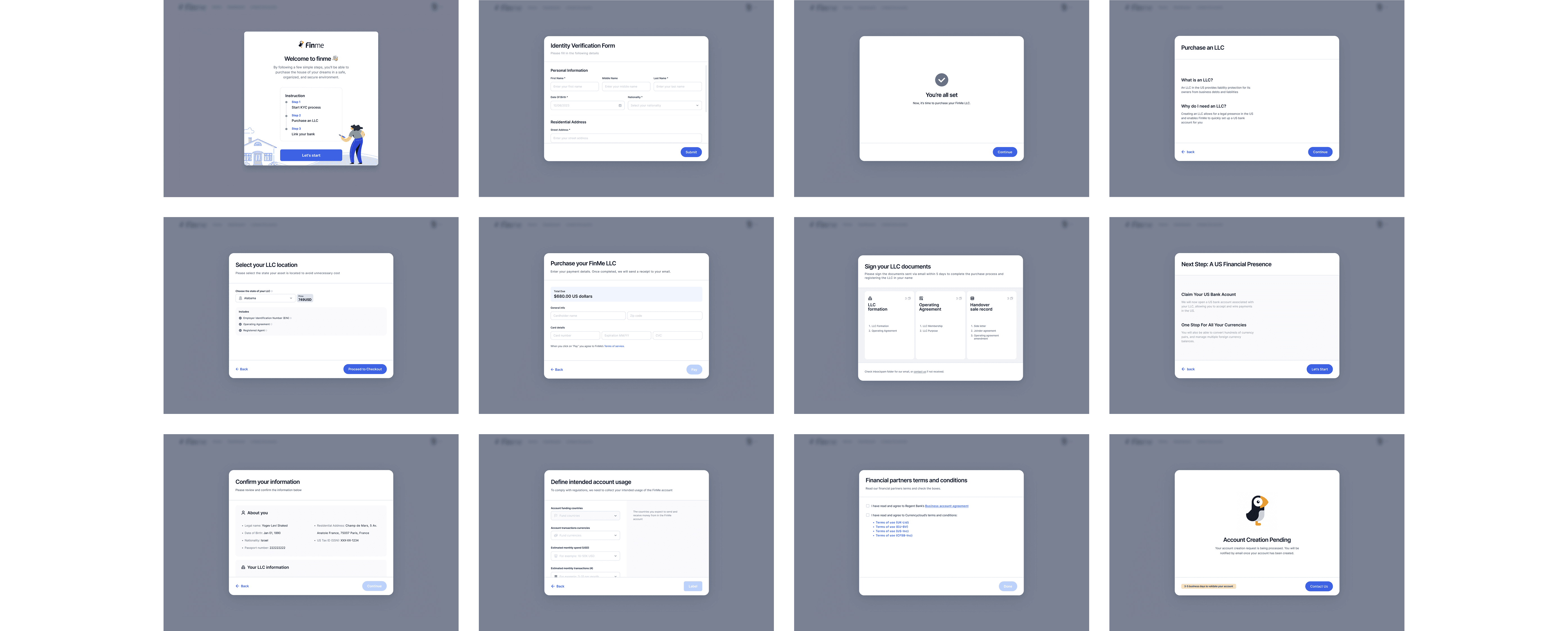
To complete all the use cases and scenarios, by the end of the project
we ended up with multiple flows and 200+ responsive screens designed.
Here is a glimpse to some of the final designs.
To complete all the use cases and scenarios, by the end of the project
we ended up with multiple flows and 200+ responsive screens designed.
Here is a glimpse to some of the final designs.
To complete all the use cases and scenarios, by the end of the project we ended up with multiple flows and 200+ responsive screens designed. Here is a glimpse to some of the final designs.

Supportive materials
To fullfill all the set requirements, a part from the UI flows, we needed to prepare additional supportive material to complement the experience.
Our research revealed a common pain point: users often entered the onboarding process without clear understanding of what is needed from them and what will they get once its completed.
To address this, we created a pre-onboarding one-pager and emails, programmed to be sent to users prior to the flow. They were designed to proactively answer frequently asked questions and prepare users for the onboarding process.
Additionally, to alleviate the confusion surrounding the required document signings, we developed a clear and concise overview document, providing the investors a plain-language explanation of each document.
To fullfill all the set requirements, a part from the UI flows, we needed to prepare additional supportive material to complement the experience.
Our research revealed a common pain point: users often entered the onboarding process without clear understanding of what is needed from them and what will they get once its completed.
To address this, we created a pre-onboarding one-pager and emails, programmed to be sent to users prior to the flow. They were designed to proactively answer frequently asked questions and prepare users for the onboarding process.
Additionally, to alleviate the confusion surrounding the required document signings, we developed a clear and concise overview document, providing the investors a plain-language explanation of each document.

Design system & handoff
Design system & handoff
The project required the implementation of a new design system, which we strategically built upon the MUI React library, guided by Material Design principles. This choice was driven by the dev team's request to accelerate development and facilitate more seamless design-to-code implementation, leveraging MUI's robust and well-documented base.
While leveraging a third-party solution offered significant advantages, I needed to invest considerable effort in customizing the system to align with our brand's unique style and develop custom components. This was crucial for maintaining the brand identity and delivering a cohesive user experience.
The project required the implementation of a new design system, which we strategically built upon the MUI React library, guided by Material Design principles. This choice was driven by the dev team's request to accelerate development and facilitate more seamless design-to-code implementation, leveraging MUI's robust and well-documented base.
While leveraging a third-party solution offered significant advantages, I needed to invest considerable effort in customizing the system to align with our brand's unique style and develop custom components. This was crucial for maintaining the brand identity and delivering a cohesive user experience.
The new design system acted as the single source of truth for the UI foundations and components, ensuring consistency and efficiency both
in design and development.
The new design system acted as the single source of truth for the UI foundations and components, ensuring consistency and efficiency both
in design and development.


Additionally, to prevent potential roadblocks during development, I took extra care in preparing my design handoffs and for any new transitions or complex interactions, I prepared interactive prototypes to demonstrate how they should work.
But most importantly, before any coding began, I always scheduled a walkthrough with the developers, explaining the files, answering any questions and making sure everybodey was on the same page.
Also, after each development cycle we performed a through QA to assure the implementation fulfilled the design and product criterias.
Additionally, to prevent potential roadblocks during development, I took extra care in preparing my design handoffs and for any new transitions or complex interactions, I prepared interactive prototypes to demonstrate how they should work.
But most importantly, before any coding began, I always scheduled a walkthrough with the developers, explaining the files, answering any questions and making sure everybodey was on the same page.
Also, after each development cycle we performed a through QA to assure the implementation fulfilled the design and product criterias.
I made sure my design files were easy to navigate with
clear naming, organized sections and details annotations.
I made sure my design files were easy to navigate with
clear naming, organized sections and details annotations.

The impact
If you got this far, first of all thank you! As you can see, this project was huge and even though I tried to summarise it the best I could, there are lot of details to mention—and a lot more I had to leave unmentioned (I courage you to come and ask more 😉).
It was an invaluable learning experience for me in so many levels. Being the only designer meant I got to own the entire design process, which was challenging but so rewarding. It made me improve conciderably my ability to make critical design decisions and present their rationale effectively. I also learned to think strategically about the entire user journey, from initial research to final implementation and further iterations.
I’m happy to say that the entire project got released to production within the set timeline. The immediate user feedback we received was amazing, yet most importantly for the measurement fot he success - all of our users onboarding to the platform since the release have been able to do it self-serve!
And as a bonus — the new onboarding also helped us convince new partners to join us in the US property investment revolution!
If you got this far, first of all thank you! As you can see, this project was huge and even though I tried to summarise it the best I could, there are lot of details to mention—and a lot more I had to leave unmentioned (I courage you to come and ask more 😉).
It was an invaluable learning experience for me in so many levels. Being the only designer meant I got to own the entire design process, which was challenging but so rewarding. It made me improve conciderably my ability to make critical design decisions and present their rationale effectively. I also learned to think strategically about the entire user journey, from initial research to final implementation and further iterations.
I’m happy to say that the entire project got released to production within the set timeline. The immediate user feedback we received was amazing, yet most importantly for the measurement fot he success - all of our users onboarding to the platform since the release have been able to do it self-serve!
And as a bonus — the new onboarding also helped us convince new partners to join us in the US property investment revolution!
66%
66%
66%
Reduction on time to first
interaction (72h → 24h)
Reduction on time to first
interaction (72h → 24h)
Reduction on time to first
interaction (72h → 24h)
7/10
7/10
7/10
Users onboarded successfully
without support requests
Users onboarded successfully
without support requests
Users onboarded successfully
without support requests
60%
60%
60%
Reduction on completion time:
(~1h calls → ~23min self-serve flow)
Reduction on completion time:
(~1h calls → ~23min self-serve flow)
Reduction on completion time:
(~1h calls → ~23min self-serve flow)
100%
100%
100%
Self-serve accomplished
(0 assisted calls needed after)
Self-serve accomplished
(0 assisted calls needed after)
Self-serve accomplished
(0 assisted calls needed after)
Waltz user onboarding redesign
Transforming Waltz' onboarding into a user-friendly, efficient, and brand-aligned experience, where the foreign investors get their “US investor kit” in a record time —no joke—in just 20 minutes.
Industry
Fintech
Proptech
Timeline
Oct 2023 - Mar 2024
Core team
Nof Mualem - Product Manager
Elana Greenspan - UX Writer
me - Product Designer
My role
End-to-end design processes
Design system building
Product foundations definition